Welcome to Buddhist Travel
 The only portal dedicated to the promotion of sustainable tourism for Buddhist sites and places of interests.
We welcome participation of tour agents and community centers.
Vesak Special 2026 / 2570 BE
The Kuala Lumpur Buddhist Circuit

Quick guide:
1) Introduction
2) Day 1: Buddhist Maha Vihara Brickfields, Kuala Lumpur and Wat Chetawan, Petaling Jaya
3) Day 2: Jin Long Shan Wan Fo Shi, Rawang and Karma Kagyu Dharma Society, Kuala Lumpur
4) Preparing Yourself
Introduction
The Kuala Lumpur Buddhist Circuit: A 2-Day Journey Across Three Vehicles
Circuit Overview: This itinerary weaves through four temples representing Buddhism's three major traditions: Theravada, Mahayana, and Vajrayana. Starting with the historic Buddhist Maha Vihara (Sinhala Theravada), moving to Wat Chetawan (Thai Theravada), then Jin Long Shan (Chinese Mahayana), and ending at Karma Kagyu Buddhist Society (Tibetan Vajrayana), visitors experience how a single dharma adapts to different cultures while preserving the Buddha's core teachings.
Why This Circuit Is Inclusive
One Dharma, Many Expressions
All Buddhist traditions share the Four Noble Truths and the Eightfold Path taught by the historical Buddha 2,600 years ago . Yet each school emphasizes different aspects of liberation. Theravada, meaning "Way of the Elders," preserves the earliest recorded teachings in the Pali Canon and focuses on individual awakening through monastic discipline . Mahayana, the "Great Vehicle," introduced the Bodhisattva ideal, postponing one's own nirvana to liberate all beings. Vajrayana, the "Diamond Vehicle," offers esoteric techniques including mantra, visualization, and meditation to achieve enlightenment in a single lifetime .
This circuit demonstrates that differences in ritual, iconography, and practice are not contradictions but upaya (skillful means), the Buddha's genius in presenting the dharma in forms accessible to diverse minds.
Cultural Crossroads of Malaysian Buddhism
Kuala Lumpur is uniquely positioned as a Buddhist meeting point. The Sinhala community established BMV in 1894, preserving Sri Lankan Theravada. Thai Theravada at Wat Chetawan serves both ethnic Thai Malaysians and local devotees. Jin Long Shan represents the vibrant Chinese Mahayana tradition brought by immigrants centuries ago. KKBS maintains Tibetan Vajrayana, a later transmission that flourished in the Himalayas. Together, they show how Buddhism absorbs local aesthetics while retaining doctrinal integrity.
Practical Inclusion
The circuit is designed for all visitors, Buddhist and non-Buddhist alike. Each temple welcomes respectful observers. The itinerary respects monastic schedules (meals, chanting) and provides clear etiquette guidance. This is not a museum tour but an invitation to witness living traditions.
Day 1: Theravada Foundations — From Sinhala to Thai Traditions
First stop: Buddhist Mahavihara, Brickfields, Kuala Lumpur
Second stop: Wat Chetawan, Petaling Jaya
Day 1 | First Stop
Morning: Buddhist Maha Vihara (Sinhala Theravada)
6:30 AM – 9:00 AM | Jalan Berhala, Brickfields

Getting there: Take the KTM Komuter or LRT Sri Petaling line to KL Sentral. Exit toward the NU Sentral mall, cross Jalan Tun Sambanthan, and walk 10 minutes west to Jalan Berhala.
Things to do/experience:
Morning Dana: Arrive before dawn to witness the ancient practice of alms-round preparation.
Explore the Grounds: After the monks retire for their meal (8:00 AM), visit:
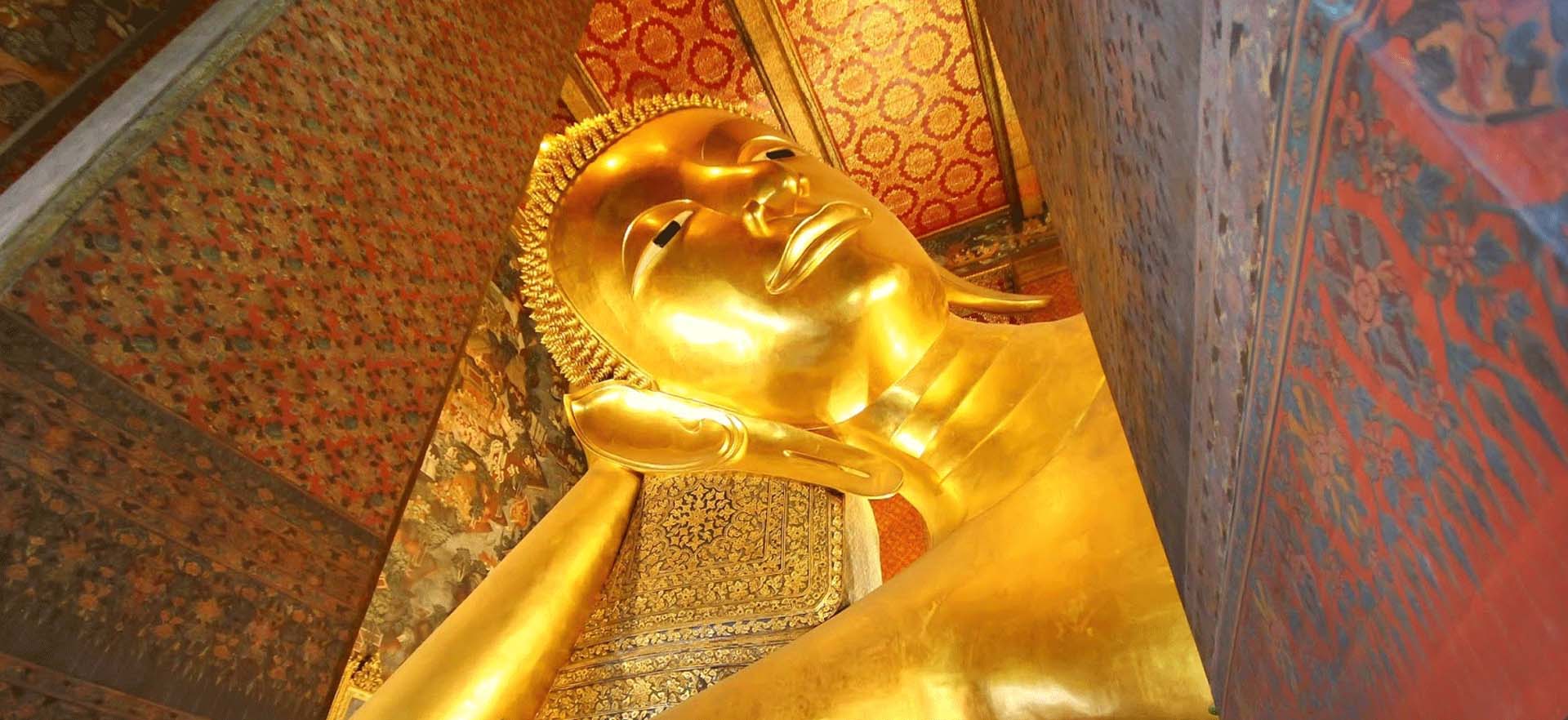
Main Shrine Hall: Houses three Buddha statues, including a serene Reclining Buddha in Parinirvana pose - symbolizing final liberation from samsara
Asoka Pillar: Four lions facing cardinal directions, representing Emperor Asoka's 3rd-century BCE peace covenant and the spread of Buddhism from India to Sri Lanka
Sacred Bodhi Trees: Grown from saplings of Sri Lanka's Sri Maha-Bodhi (itself a cutting from Bodhgaya). In Theravada, the Bodhi tree is the second refuge of the Buddha—sitting here connects one to awakening itself
Moonstone: Intricate granite carving near the shrine. The concentric rings guide the meditator from the fiery world of desire inward to the lotus of Nibbana—a granite map of the spiritual path
International Buddhist Pagoda: Houses a sacred bone relic of the Buddha. Eight miniature pagodas surround it, representing Buddhist nations. In Theravada, relics are not magical but reminders: the Buddha was a real human who became awakened
Belfry (1926): Burmese-cast bell still used to announce Uposatha days and Wesak processions
Etiquette Note: Remove shoes before entering shrine halls. Dress modestly (cover shoulders and knees). Women should avoid touching monks
11:30 AM – Lunch Dana: Return for the public lunch offering. Monks eat at noon, followed by laypeople. All are welcome—no charge. This is the community's gift
Read the Buddhist Mahavihara travelogue here:
The Heart of Dharma Heart in Brickfields
Day 2 | Second Stop
Afternoon: Wat Chetawan Temple (Thai Theravada)
1:30 PM – 4:00 PM | No. 24, Jalan Pantai, Off Jalan Gasing, Petaling Jaya

Getting there: From Buddhist Maha Vihara, take a 10-minute Grab/Taxi (approx RM 8-12) or walk to KL Sentral and board the LRT Kelana Jaya line to Universiti station (4 stops), then a 15-minute walk.
What Makes This Distinctly Thai Theravada: While doctrinally identical to BMV (both follow the Pali Canon), Wat Chetawan expresses Buddhism through Thai artistic and ritual culture.
Key Features:
Ubosot (Ordination Hall): Distinctive three-tiered Thai roof with graceful chofah (sky tassels)—architecture that signals sacred space
Black Buddha Statue: The main seated Buddha (called Luang Pho Putthak Thammin) in Maravijaya posture (calling the earth to witness), cast in the classic Sukhothai style with flame-like ushnisha (cranial protuberance)
Phra Phrom (Four-Faced Brahma): A shrine reflecting Thai integration of pre-Buddhist deities—though Theravada generally keeps local spirits outside practice, Thai Buddhism often incorporates them on temple grounds
Crematorium: Unlike BMV, Wat Chetawan includes a functioning crematorium, as Thai temples traditionally handle funeral rites for the community
Observation: Notice the differences from BMV, the architecture is unmistakably Thai (not Sinhala), the Buddha images have different proportions, and the ritual objects (lotus buds, candles, bai sri offerings) reflect Thai aesthetics. Yet the dhamma chanted in Pali is identical.
Read the travelogue here:
The Whisper of Golden Spires: A Day at Wat Chetawan, Petaling Jaya
Day 2: Mahayana and Vajrayana — The Bodhisattva's Vow and the Diamond Path
Day 2 | First Stop
Morning: Jin Long Shan Wan Fo Shi ((金龙山万佛寺)) Temple (Chinese Mahayana Buddhism)

Getting there: By Public Transport: Take the KTM Komuter (Batu Caves-Port Klang line) to Rawang station. From there, you will need a local taxi or GrabCar (ride-hailing) for the remaining 10–15 minute drive. No direct bus.
Entering the Mahayana World: Mahayana Buddhism, dominant in China, Japan, Korea, and Vietnam, introduced the Bodhisattva ideal, beings who postpone final nirvana to liberate all sentient beings. This shift in motivation (from personal liberation to universal salvation) transforms everything: iconography, ritual, and practice.
What to see at Jin Long Shan Wan Fo Shi ((金龙山万佛寺))
Grand Hall of Buddhas: Unlike Theravada's single Buddha focus, Mahayana temples feature multiple Buddhas and Bodhisattvas. Look for Avalokitesvara (Guanyin), the Bodhisattva of Compassion, often depicted with a thousand arms to reach all suffering beings. Also Ksitigarbha (Dizang) , protector of beings in hell realms, and Samantabhadra (Puxian) , embodiment of meditative practice
Vegetarian Kitchen: Mahayana temples are strictly vegetarian—a practice derived from the Brahma Net Sutra, which prohibits meat to cultivate compassion for all sentient beings. Jin Long Shan operates a dana (free) kitchen during lunch hours. Unlike Theravada's morning-only alms, Mahayana laypeople can offer lunch directly.
Prayer Wheels and Mantra Banners: A Vajrayana influence visible in some Chinese Mahayana temples due to cross-pollination. Notice the presence of mantra in Sanskrit script—Mahayana accepts scriptures in multiple languages, unlike Theravada's Pali exclusivity
Ancestral Halls: Chinese Buddhism incorporates ancestor veneration—a cultural adaptation using the Mahayana concept of "skillful means" (upaya). The Buddha's teaching is adapted to local needs without losing essence
Key Doctrinal Difference to Observe: In Theravada, enlightenment (arhat) ends one's personal suffering. In Mahayana, the Bodhisattva sees that "self" is an illusion, if there is no separate self, then "my" enlightenment is meaningless without "their" enlightenment. This is why Mahayana temples feel more "outward", with prayer for others, merit transfer rituals, and communal chanting.
Lunch Dana: Available 12:00 PM – 1:30 PM. Strictly vegetarian. No charge.
Read the Jin Long Shan Wan Fo Shi (金龙山万佛寺) travelogue here:
A Pilgrim’s Walk Through Golden Dragon Mountain
Day 2 | Second Stop
Afternoon: Karma Kagyu Buddhist Society (KKBS) - Tibetan Vajrayana

Getting there: From Jin Long Shan temple, take a Grab to the KTM station in Rawang town, and ride through to KL Sentral. From here, book a 20-minute Grab to Lorong Jubilee, Jalan Loke Yew.
The Vajrayana Experience: Vajrayana ("Diamond Vehicle") developed from Mahayana in 7th-century India and flourished in Tibet. It shares Mahayana's Bodhisattva ideal but adds esoteric techniques—mantra (sacred sound), mudra (ritual gesture), mandala (cosmic diagram), and guru yoga (teacher devotion)—to accelerate enlightenment .
KKBS follows the Karma Kagyu lineage, one of Tibet's four major schools, known for its meditation masters and the Mahamudra (Great Seal) teachings on the nature of mind.
What to See and Experience
Gompa (Meditation Hall): Entering a Vajrayana shrine is sensory immersion. Butter lamps flicker, incense hangs thick, and the air vibrates with Tibetan chanting. The altar displays:
Shakyamuni Buddha (center) as the historical source
Chenrezig statue: One of the most beautiful statue of Thousand-arms and Thousand-eyes Chenrezig statue (pronounced chen-ray-zig, the Tibetan Buddhist name for Avalokiteshvara) in Malaysia, can be found in this centre.
Green Tara: The swift, compassionate female Buddha who answers prayers instantly—Vajrayana emphasizes female deities and yidams (personal meditation deities)
Thanka (Scroll Paintings): Intricate, geometrically precise paintings depicting mandalas, lineages, and wrathful deities. These are not decoration but meditation tools—each detail encodes teaching.
Prayer Flags and Wheels: Outside, strings of five-colored flags carry mantras to the wind. Prayer wheels (metal cylinders filled with millions of mantra repetitions) are spun to generate merit, a distinctively Vajrayana practice not found in Theravada or East Asian Mahayana.
Guru Rinpoche (Padmasambhava): The 8th-century master who brought Buddhism to Tibet is often depicted with a trident and lotus. Vajrayana places great emphasis on lineage gurus, who transmit blessings directly from the Buddha's mind .
What Makes Vajrayana Unique: While Theravada seeks arhat (personal liberation) and Mahayana seeks Bodhisattva (liberation of all), Vajrayana asserts that enlightenment is already present in every being—we simply fail to recognize it. The path is not about becoming something new but realizing what we already are. This is why Vajrayana employs startling methods: wrathful deities, sexual imagery (symbolic), and transgressive rituals—all "skillful means" to shatter the ego's grip .
Etiquette at KKBS:
1) Remove shoes before entering gompa
2) Do not point feet toward altar or teachers
3) If a lama (teacher) is present, do not touch them (same rule as Theravada monks—Vajrayana monastics also follow celibacy precepts)
4) Photography usually prohibited inside gompa; ask permission
5) Spin prayer wheels clockwise only
Check for Public Events: KKBS often hosts meditation sessions, puja (ritual offerings), and teachings open to the public. Saturday afternoons sometimes feature Chenrezig group meditation.
Read the Karma Kagyu Buddhist Society travelogue here:
The Golden Garland
Journal Article: Towards Sustainable Development of Buddhist Tourism in South East Asia (Singapore Management Journal, Vol.9, No. 1)
 In 2011, the UNWTO prepared the “Religious Tourism in Asia and the Pacific” study to highlight the significance of religious tourism in Asia and the Pacific regions. The study found that places of religious importance are often the most visited destinations in many Asian countries. Even though Buddhism originated and is followed by a large population in Asia, in particularly South East Asia, Buddhist Tourism has not received the same attention as tourism related to Islam or Hinduism in the region. It is in this context that the contribution of Buddhist heritage to tourism in Asian and South East Asian countries is undertaken. This paper takes a snapshot of Buddhist Tourism in South East Asia and includes the following aspects: significant tangible and intangible Buddhist heritage developed in the country and its use for tourism purposes; visitation patterns to Buddhist sites; promotion of Buddhist tourism; and management of Buddhist destinations and heritage; use of technology in the marketing and management of Buddhist tourism and destinations; and challenges facing the growth and sustainable development of Buddhist tourism.
To read the article, cleck here: Singapore Management Journal, Vol.9, No. 1
Book: Buddhist Tourism in Asia: Towards Sustainable Development (Published by UNWTO)
 Buddhism emerged in the Indian subcontinent around the 6th century. Before long, Buddhist philosophy had spread across Asia, permeating all aspects of life. Buddhism was the backbone of many Asian civilizations, resulting in the creation of a rich and vast cultural heritage, both tangible and intangible. This has left an indelible mark on the region.
This report is built on case studies of Buddhist tourism in 16 countries across Asia. These destination countries are not only home to large numbers of Buddhists, they also showcase the legacy of Buddhism, with many examples of its tangible and intangible heritage. Visitation patterns to Buddhist sites, the management of Buddhist destinations and heritage, marketing and promotion – with a special emphasis on the place of technology – are some of the key issues discussed below.
The Buddhist Channel (parent owner of Buddhistravel.com), in collaboration with Prof. Dr. Victor Wee of Taylor's University, Malaysia took about 8 months of research, writing and editing to cover the Main Introduction to Buddhism as well as all the Southeast Asian countries covered in this study. This work is a "must have" for tour developers and managers.
To purchase the book, please visit: Buddhist Tourism in Asia: Towards Sustainable Development
International Buddhist Tourism Conference (IBTC)
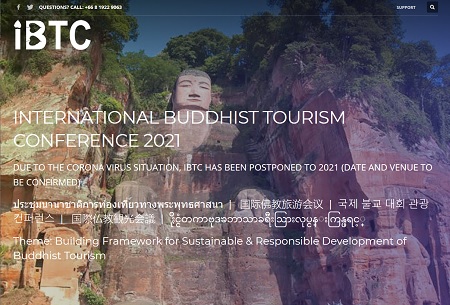 The International Buddhist Tourism Conference (IBTC) is the first gathering of its kind organized to meet the growing demands of Buddhist related travels and pilgrimage activities. IBTC is organized to provide a platform for organizations and like-minded people related to Buddhist Tourism to enable them to connect, share experiences and learn from one another.
IBTC aims to address these issues in detail via discussions and idea sharing by key stakeholders.
IBTC will introduce the theme “Building Framework for Sustainable & Responsible Development of Buddhist Tourism” to open participants’ and hosts’ minds on how responsibly organized Buddhist tours and pilgrimages can be a benefit to visitors and to local communities, local culture, the environment while at the same time sustaining authentic local Buddhist rites and rituals without corrupting their intrinsic values.
For more information, please visit: The International Buddhist Tourism Conference (IBTC)